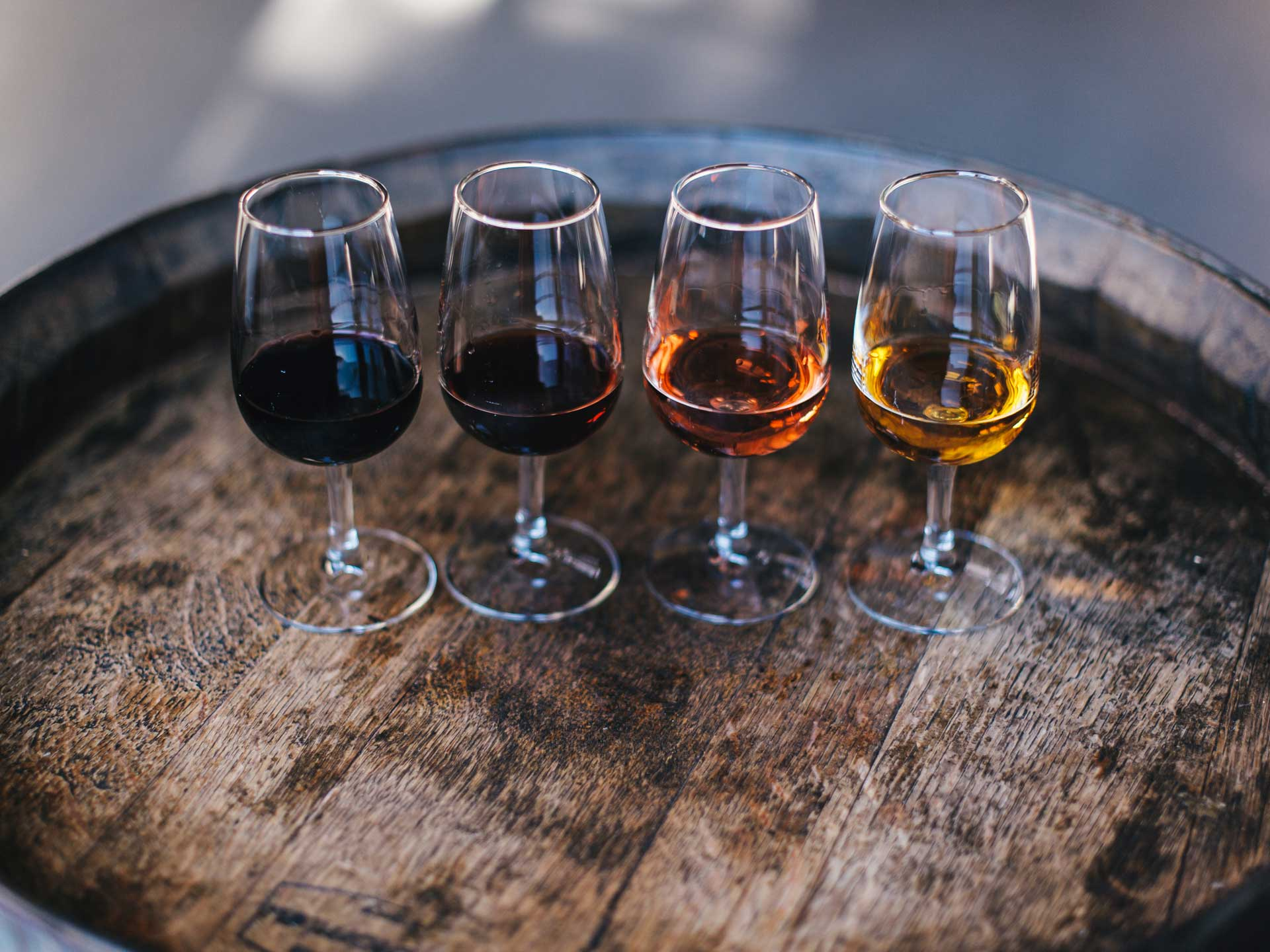
We hold a considerable range of wines with most countries and regions represented. We select our bottles carefully and hope to offer interesting wines from the affordable through to finer vintages.
Dessert & Fortified
Chateau Septy ’13 (37.5cl), 13% alc/vol, Monbazillac, Bordeaux, France, £18.25
The secret with dessert wines is balance. Sweetness is to some extent a misnomer as it is more about concentrated ripeness. Here we have a delectable nose, rich in a combination of exotic and citrus fruit, with honeyed notes. The palate is richly-textured yet has a vibrant flash of zest which gives focus and direction – a great introduction to dessert wine.
Grape: 90% Semillon, Sauvignon 10%
Style: Dessert: Full-bodied & sweet
Closure: Cork
Drinking: Now-2030
Food Match: Intense chocolate puddings
Sauternes ’16 (37.5cl), 13.5% alc/vol, Maison Sichel, Barsac, Sauternes, France, £21.75
Sauternes is a magical name which is known worldwide. The topography of this very specific area has created a microclimate all of its own and the only area capable of producing such wines. The estate is located on the edge of the limestone plateau of Barsac, bordering Doisey-Daene, Doisy-Vedrine and Coutet. Bright gold with a sweet nose of tropical and candid citrus fruit. Creamy and rich and full of indulgent flavour.
Grape: 80% Semillion, 20% Sauvignon Blanc
Style: Dessert: Sweet
Closure: Natural Cork
Drinking: Now-2025
Food Match: Foie gras, salt-cured ham, oysters, Roquefort terrine
VAT 5 Botrytis Semillon ’13-’14 (37.5cl), 12% alc/vol, Deen De Bortoli, New South Wales, Australia, £18.25
Founded in 1928 family-owned de Bortoli is one of Australia’s largest producers with this wine popularly seen as the sibling to their legendary ‘Noble One’. A sweet white wine made from Semillon affected by Noble Rot (botrytis cinera) this intense citrus wine is oak matured for 12 months for greater complexity. Classic botrytis characters of dried apricots and marmalade with a touch of vanilla oak in this luscious wine from the Riverina.
Grape: 100% Semillon
Style: Dessert: Deep & honeyed
Closure: Natural cork
Drinking: Now
Food Match: Blue cheese, crème brûlée
Tokaji Late Harvest ’15-’16 (50cl), 12.5% alc/vol, Domaine de Disznoko, Hungary, £28.50
The name Disznókő – the rock of the wild boar – was first recorded in 1413 and refers to a large rock sat atop a small hill overlooking the vineyards. Listed as a “first growth” as far back as 1732, this 150ha vineyard in the south west of the Tokaji region has long been regarded as one of the region’s finest.
As with much of Tokaji, Disznókő’s fortunes suffered under nationalisation during the Communist era. But, in 1992, it was purchased by AXA Millésimes (owners of Château Pichon Longueville and Quinta do Noval, amongst others) who have reinvigorated Disznókő and put in the love and investment required to return it to the top rank of Tokaji estates
This wine is made from late harvested rich grapes with noble rot. Aged for a few months in oak barrels this charming wine is rich but fresh with a silky and fruit finish and delightful acidity.
Grape: 100 % Furmint
Style: Dessert: Medium-bodied
Closure: Natural cork
Drinking: Now / Now or Keep / Keep
Food Match: Blue cheeses of fruit desserts
Elysium Black Muscat ’16 (37.5cl), 15% alc/vol, Andrew Quardy, California, USA, £19.75
Black Muscat is an under-appreciated Muscat variety and one of the very few black-skinned Muscats. Elysium is Greek for heaven and this sweet, unique and intense wine with rich flavours does indeed have great class. Delicious and easy to like, this wine has tones of honey and black cherry. It is not too sweet, however, and contains a good balance or fruity acidity as well as a long and divine finish. Delicious and exceptional.
Grape: 100% Black Muscat
Style: Dessert: Medium–bodied
Closure: Natural cork
Drinking: Now / Now or Keep / Keep
Food Match: Fruit or black forest cake, runny or blue cheese
San Emilio Pedro Ximenez (75cl), 17% Solera Reserva, Spain
£40.00 per bottle or 50ml 4.25
This wine is fortified and then aged in the “solera and criaderas” system. In the solera process, a series of containers are filled with the product over a series of equal ageing intervals (usually a year). One container is filled for each interval. At the end of the interval after the last container is filled, the oldest container in the solera is tapped for part of its content, which is bottled, the container is refilled from the next oldest container, and that one in succession from the second-oldest, down to the youngest container, which is refilled with new product. This procedure is repeated at the end of each aging interval. The transferred product mixes with the older product in the next barrel. No container is ever fully drained, so some of the earlier product always remains in each container. This remnant diminishes to a tiny level, but there can be significant traces of product much older than the average, depending on the transfer fraction. In theory traces of the very first product placed in the solera may be present even after 50 or 100 cycles. Dark mahogany in colour and viscous, redolent of ripe fruit, dried figs and roasted coffee beans. Sweet, velvety and soft with an extremely long aftertaste.
Grape: 100% Pedro Ximinez
Style: Sherry: Sweet & velvety
Closure: Natural cork
Drinking: Now
Food Match: Excellent as an digestif or with dark chocolate and blue cheeses served at
13ºC. Alternatively ideal served chilled over vanilla ice cream.
Dow’s Trademark Finest Reserve Port (75cl), 20% alc/vol, Vinhos, Portugal
£30.00 per bottle or 50ml £3.25
Established in 1798 this vineyard is managed by six members of the Symington family. Dow’s owns two of the Douro Valley’s finest vineyards, Quinta de Senhorada Ribeira and Quinta do Bomfim, acquired in 1890 and 1896 respectively. This deep purple-black port has rich mouth filling flavours of ripe fruit balanced with a hint of black chocolate and peppery spice. This wine has been blended by Peter Symington who has over forty years of experience.
Grape: Blend including;Touriga Nacional & Fanca, Tinta Barroca, Roriz & Cao
Style: Fortified: Rich & dark
Closure: Natural cork
Drinking: Now-2025
Food Match: Chocolate & caramel, all good cheeses
Ramos Pinto LBV ’09 (75cl), 19.5% alc/vol, Vila Nova De Gaia, Portugal
£35.00 per bottle or 50ml £3.50
Established in 1880 the Ramos Pinto House makes very good port from amongst the best grapes of the Douro Delimited Region. While vintage port is bottled in the second year after the vintage, late bottled vintage is generally kept in cask until the fourth year. As a result it is usually smoother, more developed and easier to drink — but still powerful and harmonious. This wine is unfiltered and so may contain sediment.
Grape: 60% Touriga Nacional, 30% Touriga Fanca, 10% TintaRoriz
Style: Fortified: Rich & dark
Closure: Natural cork
Drinking: Now-2025
Food Match: Chocolate brownie, hard cheese
Port
Ramos Pinto LBV ’09, 19.5% alc/vol, Vila Nova De Gaia, Portugal £35.00 per bottle or 50ml £3.50
Established in 1880 the Ramos Pinto House makes very good port from amongst the best grapes of the Douro Delimited Region. While vintage port is bottled in the second year after the vintage, late bottled vintage is generally kept in cask until the fourth year. As a result it is usually smoother, more developed and easier to drink — but still powerful and harmonious. This wine is unfiltered and so may contain sediment.
Grape: 60% Touriga Nacional, 30% Touriga Fanca, 10% TintaRoriz
Style: Fortified: Rich & dark
Closure: Natural cork
Drinking: Now-2025
Food Match: Chocolate brownie, hard and soft cheese
Cognac
Courvoisier V.S. Napoleon Cognac
40% alc/vol
Aged longer to give distinctive character and a more rounded taste. Colour; Amber
25ml
£ 2.85
Remy Martin V.S.O.P. Fine Champagne Cognac
40% alc/vol
Taken from the best two crus only this flagship brand is well structured and balanced with a smooth complexity. Colour; Yellow amber
25ml
£ 3.50